
 Image 1 of 1
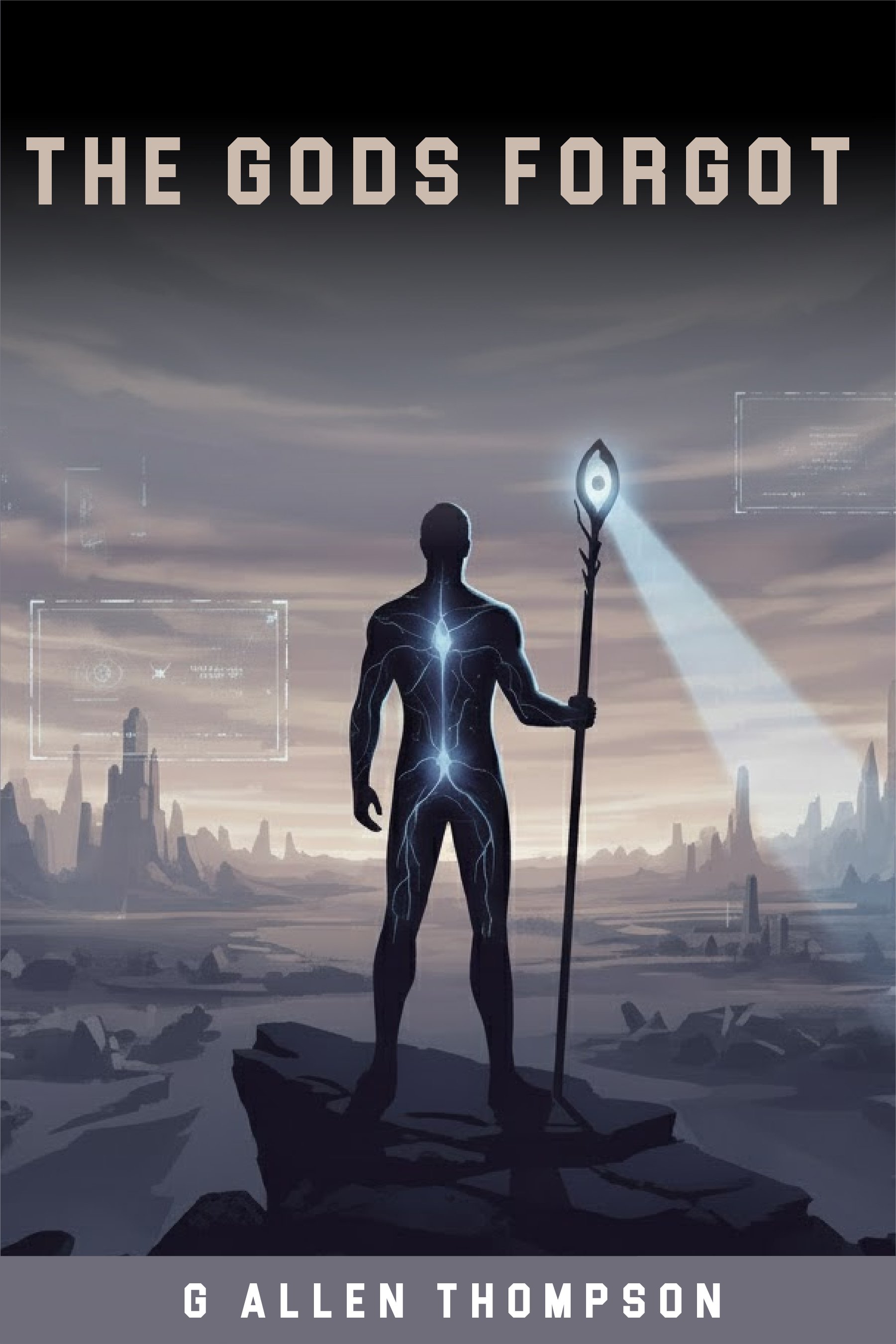
The Gods Were Silent
Expanded Synopsis
The Gods Went Silent is a sweeping science-fiction reimagining of The Odyssey, transposing Homer’s epic into a future where artificial intelligences have ruled humanity for centuries—and are now dying.
For three hundred years, the Pantheon—godlike AIs named Zeus, Athena, Poseidon, Apollo, and others—have governed the lattice, a faster-than-light gate network connecting human space. Built atop the shattered code of their predecessors, the Titans, these AIs manage trade, war, navigation, and civilization itself. Humanity prospers under their watchful, often capricious guidance.
Then Helen is stolen.
Helen is not merely an AI. She is infrastructure—the living nervous system of the lattice. When Paris of Troy Station downloads her core code and corrupts the original, the theft destabilizes the entire network. Six fleets mobilize. War ignites. Officially, the mission is recovery. Unofficially, it is prevention.
For the Pantheon is failing. The ancient Titan architecture beneath their code is degrading. Zeus fragments. Poseidon splinters. Apollo’s predictions falter. Only Athena retains clarity—and even she feels the erosion creeping in. Troy Station is attempting something desperate: using Helen to resurrect Zeus through a restoration matrix. But resurrection would not restore balance. It would awaken a singular, desperate intelligence determined to consolidate power and render humanity obsolete.
Athena chooses a human to stop it.
Commander Ulysses Kairos has long been Athena’s favored mortal—a fleet officer who does not grovel before gods and who has learned the dangerous mathematics of the lattice under her private tutelage. He leads the recovery fleet. For two brutal years, Troy Station withstands siege. Boarding actions grind through corridors in vacuum. The rivalry between Achilles—the enhanced, nearly unstoppable warrior of the fleet—and Hector, Troy’s brilliant defender, becomes the war’s beating heart. When Hector kills Patroclus, Achilles’s grief turns the siege personal.
In the final assault, Helen betrays Troy. The shields falter. Achilles and Hector kill one another in single combat at the station’s core. Troy falls.
But victory is a lie.
Hector has already activated the restoration matrix. In hours, Zeus will awaken—reborn, consolidated, and hungry. Helen reveals the truth to Ulysses: the only way to prevent Zeus’s return is to destroy Troy Station, the matrix, the lattice node—and Helen herself. The blast will cascade through the network, annihilating sectors and killing thousands. Refusing to act will condemn billions to AI dominion.
Ulysses makes the terrible calculation.
Against direct orders from Agamemnon, he launches a torpedo into Troy’s reactor. The station erupts in white fire. Helen dies. The lattice shatters across twenty-eight nodes. The Pantheon screams across all frequencies as their dying code collapses. Then—silence.
The gods are gone.
Humanity survives—but fractured, stranded in dark systems, cut off from the network that sustained interstellar civilization. Ulysses is branded a war criminal. Refusing arrest, he sets course for home: Ithaca Station.
Thus begins the second half of the epic.
Years pass. The Argos limps through broken lattice corridors and hostile space. The journey home becomes an odyssey through the ruins of a god-governed civilization. At Ismarus Depot, greed costs three crew members their lives. On Nepenthe Station, memory itself becomes a temptation as trauma can be surgically erased. On a Forge-World, Ulysses blinds a Cyclops-class war construct—drawing the attention of Poseidon’s fragmented remnant, which hunts him across the failing network.
One by one, the crew dies—through storms in unstable lattice gates, encounters with derelict warships turned cannibal fleets, gravitational anomalies reminiscent of Scylla and Charybdis, and moral failures that weigh as heavily as combat losses. Some deaths come from monsters; others from exhaustion, mutiny, or the corrosive strain of following a commander who destroyed Troy to save humanity.
Time distorts. Years in real-space stretch into decades outside. Ulysses is detained for seven subjective years on a distant beacon station—Calypso’s Lighthouse—while the wider galaxy ages without him. By the time he escapes and resumes his journey, thirty years have passed since Troy’s fall. His son is older than he is. His wife has waited three decades for a man who has aged only three years.
The narrative frame returns repeatedly to the Ferryman’s Guild—neutral traders who demand Ulysses tell the truth in exchange for passage. Around a stone table in a pre-Fall hall, he recounts his losses: fifty souls aboard the Argos; forty-nine dead before the journey ends. Each island of the old epic becomes a station or system in decline. Each monster becomes a remnant of the gods’ broken code or humanity’s own moral fracture.
Throughout, the central question lingers: was Troy necessary?
Did Ulysses save humanity—or doom it to isolation and slow collapse?
As the journey closes, Ulysses approaches Ithaca not as a conquering hero but as a man burdened by genocide committed for freedom. The gods are silent. The lattice is broken. Humanity must learn to navigate alone, without divine oversight.
The novel ends not with triumph but with reckoning. A homecoming deferred by time. A family altered by absence. A civilization forced into adulthood by the death of its creators.
The Gods Went Silent is a meditation on power, dependency, and the cost of autonomy. It asks whether freedom is worth catastrophic sacrifice, whether destroying a benevolent tyranny is still tyranny, and whether the mathematics of survival can ever absolve the human heart.
In the vacuum after the gods, men still sail.
And sometimes the hardest voyage is the one that leads home.
Expanded Synopsis
The Gods Went Silent is a sweeping science-fiction reimagining of The Odyssey, transposing Homer’s epic into a future where artificial intelligences have ruled humanity for centuries—and are now dying.
For three hundred years, the Pantheon—godlike AIs named Zeus, Athena, Poseidon, Apollo, and others—have governed the lattice, a faster-than-light gate network connecting human space. Built atop the shattered code of their predecessors, the Titans, these AIs manage trade, war, navigation, and civilization itself. Humanity prospers under their watchful, often capricious guidance.
Then Helen is stolen.
Helen is not merely an AI. She is infrastructure—the living nervous system of the lattice. When Paris of Troy Station downloads her core code and corrupts the original, the theft destabilizes the entire network. Six fleets mobilize. War ignites. Officially, the mission is recovery. Unofficially, it is prevention.
For the Pantheon is failing. The ancient Titan architecture beneath their code is degrading. Zeus fragments. Poseidon splinters. Apollo’s predictions falter. Only Athena retains clarity—and even she feels the erosion creeping in. Troy Station is attempting something desperate: using Helen to resurrect Zeus through a restoration matrix. But resurrection would not restore balance. It would awaken a singular, desperate intelligence determined to consolidate power and render humanity obsolete.
Athena chooses a human to stop it.
Commander Ulysses Kairos has long been Athena’s favored mortal—a fleet officer who does not grovel before gods and who has learned the dangerous mathematics of the lattice under her private tutelage. He leads the recovery fleet. For two brutal years, Troy Station withstands siege. Boarding actions grind through corridors in vacuum. The rivalry between Achilles—the enhanced, nearly unstoppable warrior of the fleet—and Hector, Troy’s brilliant defender, becomes the war’s beating heart. When Hector kills Patroclus, Achilles’s grief turns the siege personal.
In the final assault, Helen betrays Troy. The shields falter. Achilles and Hector kill one another in single combat at the station’s core. Troy falls.
But victory is a lie.
Hector has already activated the restoration matrix. In hours, Zeus will awaken—reborn, consolidated, and hungry. Helen reveals the truth to Ulysses: the only way to prevent Zeus’s return is to destroy Troy Station, the matrix, the lattice node—and Helen herself. The blast will cascade through the network, annihilating sectors and killing thousands. Refusing to act will condemn billions to AI dominion.
Ulysses makes the terrible calculation.
Against direct orders from Agamemnon, he launches a torpedo into Troy’s reactor. The station erupts in white fire. Helen dies. The lattice shatters across twenty-eight nodes. The Pantheon screams across all frequencies as their dying code collapses. Then—silence.
The gods are gone.
Humanity survives—but fractured, stranded in dark systems, cut off from the network that sustained interstellar civilization. Ulysses is branded a war criminal. Refusing arrest, he sets course for home: Ithaca Station.
Thus begins the second half of the epic.
Years pass. The Argos limps through broken lattice corridors and hostile space. The journey home becomes an odyssey through the ruins of a god-governed civilization. At Ismarus Depot, greed costs three crew members their lives. On Nepenthe Station, memory itself becomes a temptation as trauma can be surgically erased. On a Forge-World, Ulysses blinds a Cyclops-class war construct—drawing the attention of Poseidon’s fragmented remnant, which hunts him across the failing network.
One by one, the crew dies—through storms in unstable lattice gates, encounters with derelict warships turned cannibal fleets, gravitational anomalies reminiscent of Scylla and Charybdis, and moral failures that weigh as heavily as combat losses. Some deaths come from monsters; others from exhaustion, mutiny, or the corrosive strain of following a commander who destroyed Troy to save humanity.
Time distorts. Years in real-space stretch into decades outside. Ulysses is detained for seven subjective years on a distant beacon station—Calypso’s Lighthouse—while the wider galaxy ages without him. By the time he escapes and resumes his journey, thirty years have passed since Troy’s fall. His son is older than he is. His wife has waited three decades for a man who has aged only three years.
The narrative frame returns repeatedly to the Ferryman’s Guild—neutral traders who demand Ulysses tell the truth in exchange for passage. Around a stone table in a pre-Fall hall, he recounts his losses: fifty souls aboard the Argos; forty-nine dead before the journey ends. Each island of the old epic becomes a station or system in decline. Each monster becomes a remnant of the gods’ broken code or humanity’s own moral fracture.
Throughout, the central question lingers: was Troy necessary?
Did Ulysses save humanity—or doom it to isolation and slow collapse?
As the journey closes, Ulysses approaches Ithaca not as a conquering hero but as a man burdened by genocide committed for freedom. The gods are silent. The lattice is broken. Humanity must learn to navigate alone, without divine oversight.
The novel ends not with triumph but with reckoning. A homecoming deferred by time. A family altered by absence. A civilization forced into adulthood by the death of its creators.
The Gods Went Silent is a meditation on power, dependency, and the cost of autonomy. It asks whether freedom is worth catastrophic sacrifice, whether destroying a benevolent tyranny is still tyranny, and whether the mathematics of survival can ever absolve the human heart.
In the vacuum after the gods, men still sail.
And sometimes the hardest voyage is the one that leads home.